The AI agent layer for electronics design
We catch the logical design errors
hidden between documents.
SECA structures requirements, schematics, RTL and BOMs into one design graph, generates drafts on top of it, and verifies them with cited evidence — before the design ships. Deployed on-premises.
Engineers drown in documents.
They should design.
0%+
of engineering time goes to reading documents, not designing
0%+
of design errors pass review only to come back as rework
Hardware data is fragmented.
Requirements live in systems-team PDFs, schematics and RTL in EDA tools, BOMs in ERP and Excel, defect history in QA documents. Every design change means someone has to track down and update each of them by hand. That is still how it works today.
Requirements
PDF · Word — systems team
- DOCX
- XLSX
Schematics · RTL
EDA — circuit team
- SCH
- .V
- SPICE
BOM · Specs
ERP · PLM · Excel — procurement team
- SAP
- 3DX
- XLSX
- STEP
Defect history
Docs · Excel — QA team
- DOC
- XLSX
- JIRA
Structuring, generation, and verification on one hardware-native ontology.
Scattered design artifacts flow into SECA's design-data layer; three agent modules run on top of it, and the results flow back into the EDA, PLM and document tools you already use.
- Requirements
- Circuits · RTL
- 2D Drawings
- BOM · Specs
- Defect History
SECA — Design Data Orchestration Layer
On-premises01
Structuring
Hardware design artifacts — requirements, drawings, circuits — are structured into one ontology, with every value traced to its source.
02
Generation
On top of it, SECA generates the architecture, block diagrams and draft BOMs, and carries the design through to the circuit level.
03
Verification
AI agents check designs against the ontology and surface logical errors and omissions, with evidence.
- EDA
- PLM
- Requirements Management
- Excel · Documents
We are building a design-specialized foundation model
that understands requirements through physical layout.
Training data
RTLBehavior · control
always @(*) begin
  if (a) y = b & c;
  else   y = d | e;
end
NetlistFlattened · gates · nets
wire n1, n2;
AND2_X1 g1 (.A1(b), .A2(c), .ZN(n1));
OR2_X1  g2 (.A1(d), .A2(e), .ZN(n2));
MUX2_X1 g3 (.S(a), .A(n2), .B(n1), .Z(y));
LayoutArea · placement · routing
die 2.4 × 1.6 mm
macro A0 @ (120, 80) rot 0
M3 route n1: (12,4)→(48,4)
via M2/M3 @ (48,4)
Circuit Foundation Model
Logical view
Logical representation
Physical view
Physical representation
Requirements → logic → physical, joined in one representation space
Enterprise design workflow · on-premises
- Design generation
- Cross-domain check
- Adapts & learns on in-house data
Logical and physical views of the same circuit meet in one model space — any divergence is caught as a logical design error.
Signed. Paid. Proven.
Measured in paid customer PoCs.
−0%
requirements review time
Semiconductor design — verification
Requirements documents structured and verification items generated automatically, cutting review time by 90%

2 h → 10 min
review time per part
Home appliances — part search & substitution
Drawings and BOMs structured into a knowledge graph to recommend similar and alternative parts that meet the spec, with evidence

−0%
first-draft effort
Automotive — block diagram & parts
Automated from requirements through part-family selection, pin verification and block-diagram generation — 480 → 160 hours per month
Partners & Customers










Case studies are shared on request.
Tell us your industry and use case and we will email the relevant material — part matching & recommendation, requirements-driven design automation, semiconductor reverse engineering.
AI catches the logical design errors
that people miss.
SECA builds AI agents for electronics and hardware design. Hardware design produces dozens of artifacts — schematics, BOMs, datasheets, layouts, requirements documents — and inconsistencies between them lead to design errors, production delays and quality incidents. Until now, catching them has relied almost entirely on human eyes and experience.
SECA structures design artifacts into one design graph and automatically analyzes the relationships across documents, surfacing the logical design errors people tend to miss — with cited evidence. SECA spun off from Studio341, LG Electronics' in-house venture program, in June 2026 and raised seed funding from LG Electronics and BluePoint Partners.
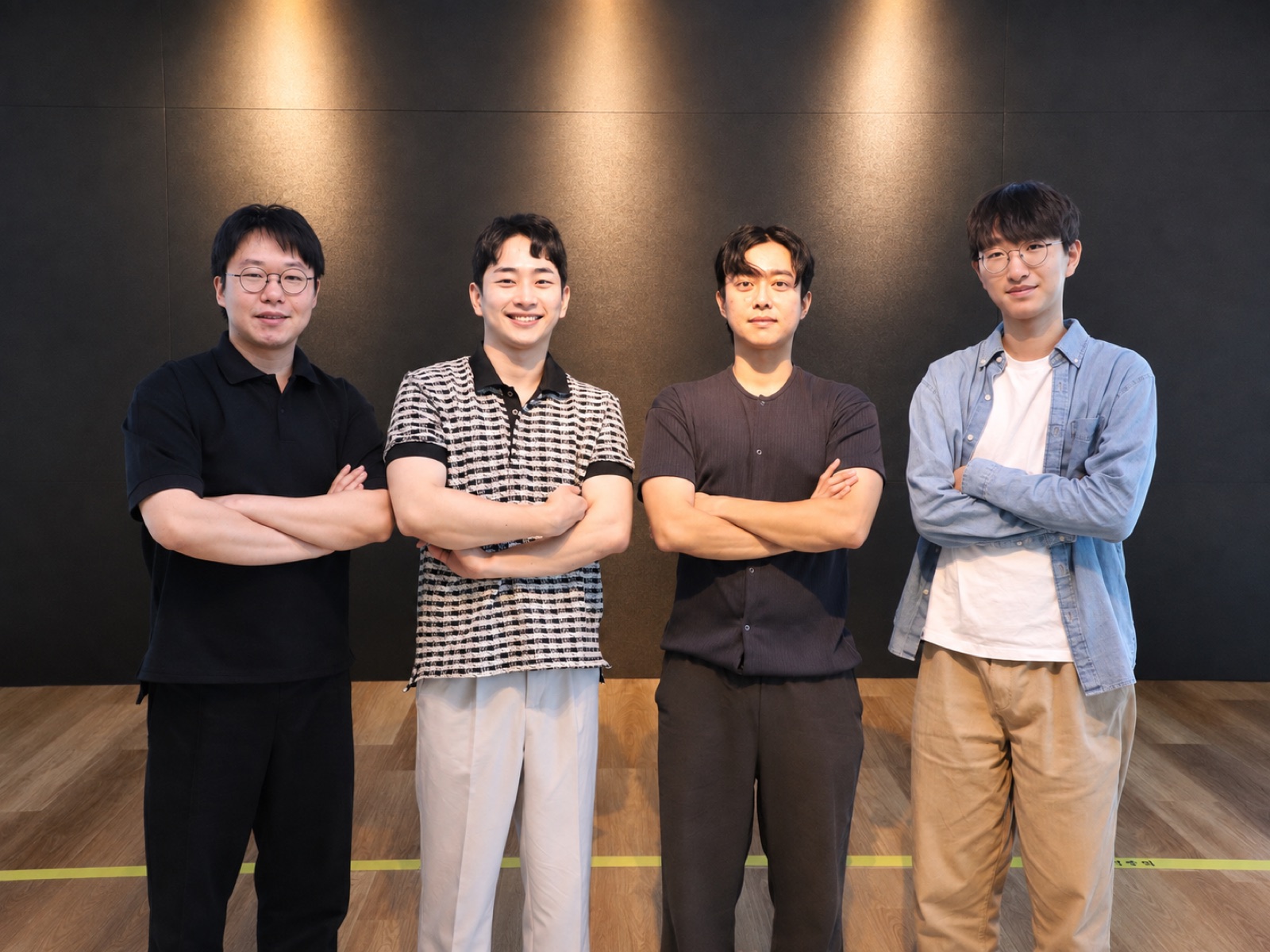
Junhyung Kim Founder & CEO
Led Hyundai Motor projects at LG Electronics Vehicle Solutions before founding SECA to close the gap between AI research and real hardware design.
LinkedInLatest from SECA
All news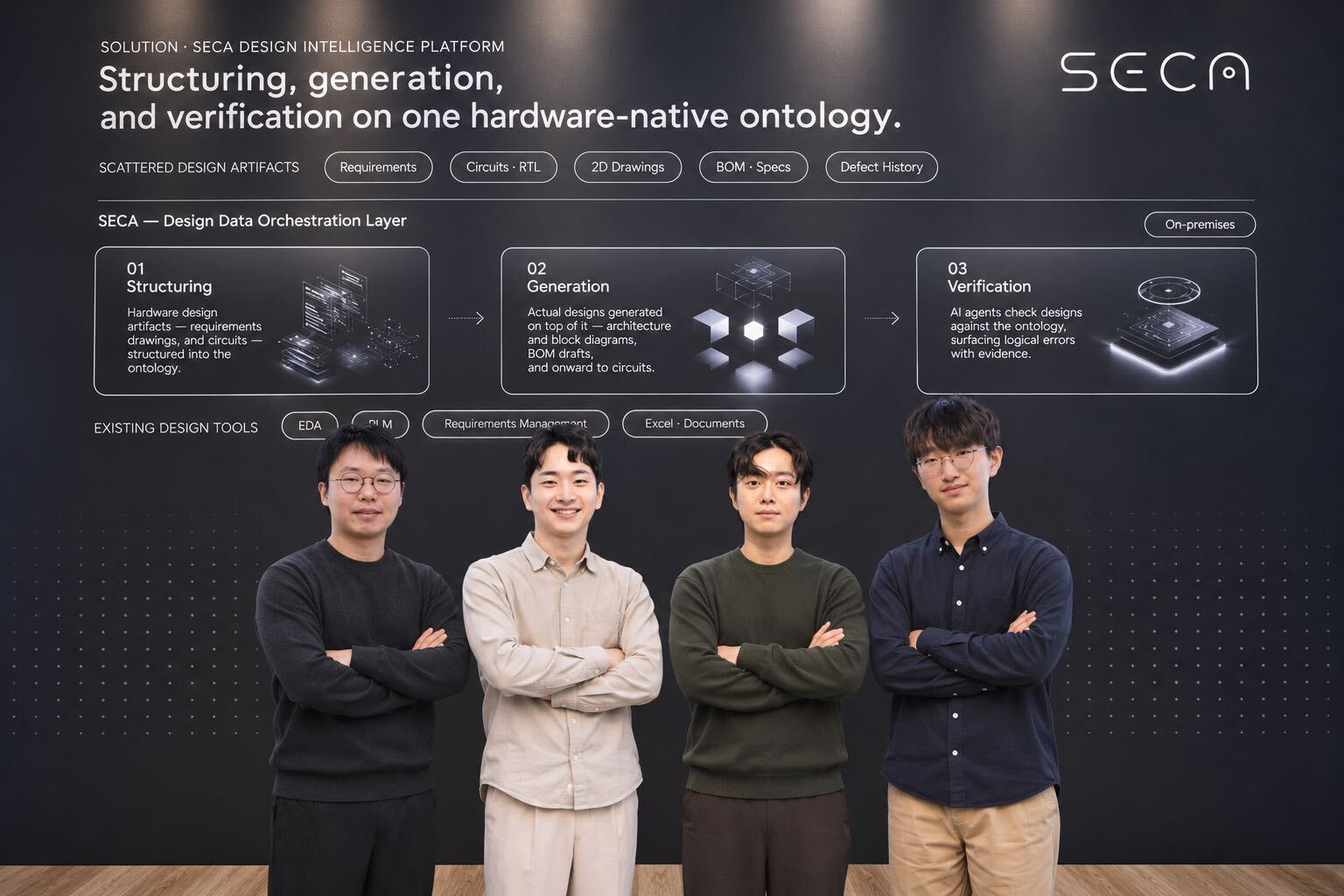
Contact
For product, partnership or press inquiries, use the form or email us. We reply within 24 hours.
Location
14 Seochodae-ro 74-gil, Seocho-gu, SeoulSamsung Fire Tower 18FNAVER D2SF Gangnam
Agents execute.
Engineers lead.
A few sample design artifacts are all we need. We'll show you which errors we catch in your own data.